
Most advice on a trust building exercise in B2B sales is too soft. It talks about rapport, tone, and being “human,” then leaves you with nothing a buyer can verify in the deal itself. That's weak guidance for Solution Engineers (SEs) and PreSales leaders, because trust has to show up in discovery notes, demo scope, POC criteria, and the way you handle risk before procurement gets involved.
Trust gets built before the demo starts. If the buyer won't confirm the problem, the constraints, and the success criteria, you don't have enough to show. The exercises below are not icebreakers. They are live-call moves you can run in discovery, a demo, a POC kickoff, or a stakeholder meeting, each one leaving a visible artifact the buyer can check later.
Start with the read-back. It costs nothing, and it tells you whether the next hour is worth spending.
1. Discovery Read-Back
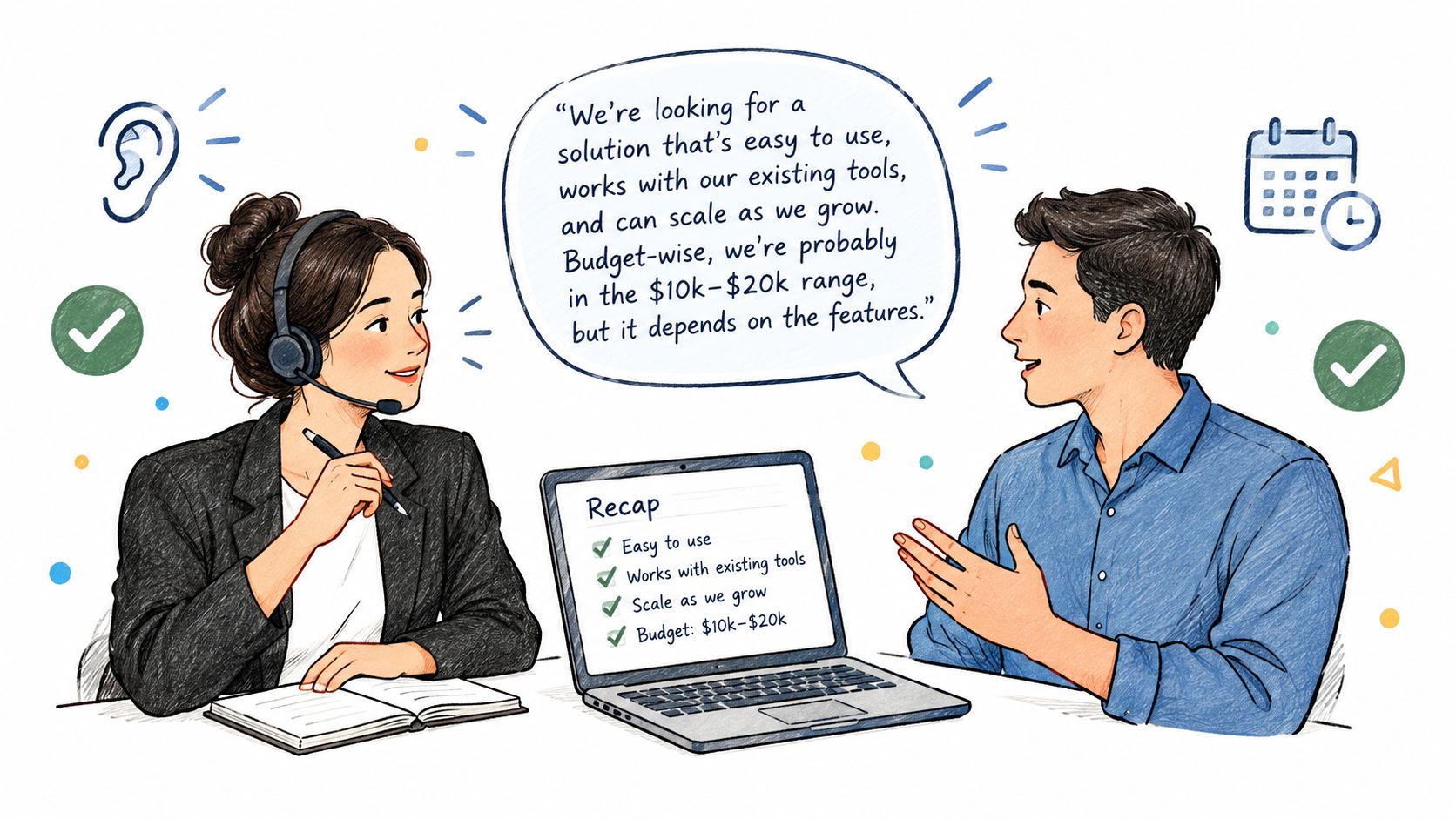
A strong discovery read-back is the cleanest trust building exercise you can run. You restate the buyer's problem, constraints, and success criteria in their own language before you propose anything. Then you ask them to correct you. If they can't confirm your summary, your discovery wasn't good enough to earn a demo.
That sounds simple because it is. The discipline is in the wording. Use the buyer's nouns, not yours. If they talk about carrier invoices, ERP freeze windows, or audit deadlines, repeat those exact terms instead of translating them into generic solution language.
A practical version looks like this. You close the call with a short summary, send a written recap while the conversation is still fresh, and copy the AE so the notes show up where the team can see them. The written artifact matters. It gives the buyer something to edit, and it gives you proof that you listened.
Practical rule: Name the constraint you're least sure about and ask directly whether it's right. The buyer's correction there is usually more valuable than your polished summary.
A real SE move here is to treat the read-back as a gate between discovery and any technical proposal. If the buyer won't sign off on the summary, they haven't earned a demo yet. That's not being difficult. That's protecting the deal.
If you want a framework for the call itself, use the discovery call guide for Solution Engineers. A read-back that never changes the demo scope usually means your questions were too shallow.
2. Known-Limitations Disclosure in the Demo
Candor builds more trust than polish. In a demo, a deliberate limitations block tells the buyer what the product does not do well, what's on the roadmap with no committed date, and where a competitor may be stronger for this use case. That's not a confession. It's control of the framing.
This move works because surprise kills credibility. If the buyer discovers a limitation on their own, they assume you were hiding it. If you name it before they ask, you look prepared and honest. That's especially useful when the limitation touches a stated requirement, like a security certification, a workflow edge case, or a complex approval pattern.
Keep the block tight and relevant. Don't dump every gap you know. Only disclose what matters to this buyer's criteria, then pair it with a mitigation, like a workaround, partner integration, or phased approach. If you've agreed on roadmap language with product marketing, keep to that language. Never state a date you can't put in writing.
A useful habit is reviewing recorded demos to see whether limitations appear before or after the technical deep dive. Earlier is usually better for trust, because it prevents the buyer from building confidence on a false premise.
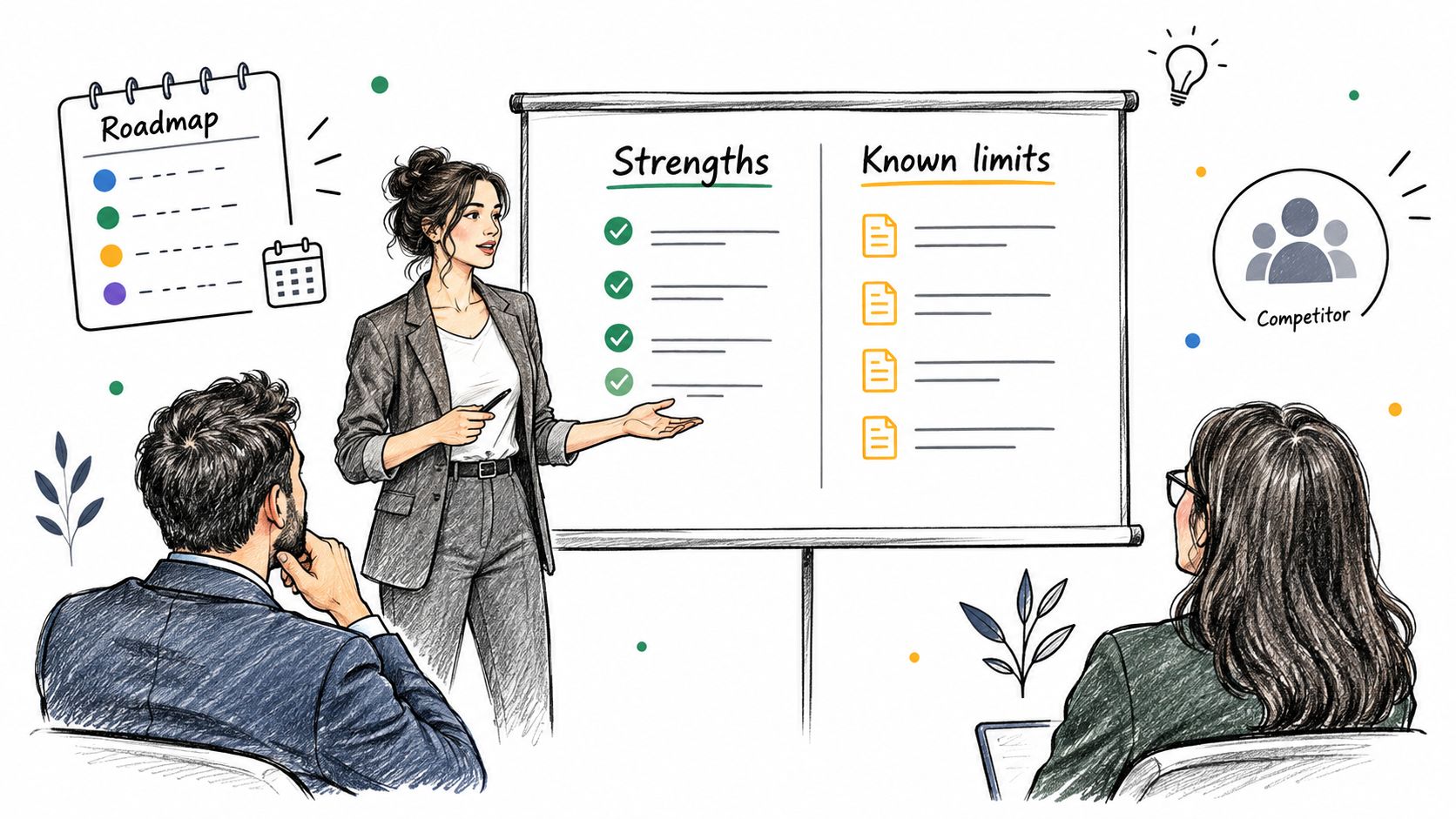
If a gap matters to the buyer and you name it first, it becomes evidence of judgment. If they find it first, it becomes evidence of evasiveness.
The trade-off is obvious. Short-term enthusiasm may dip. Long-term credibility usually rises.
3. Mutual Success Plan Co-Creation
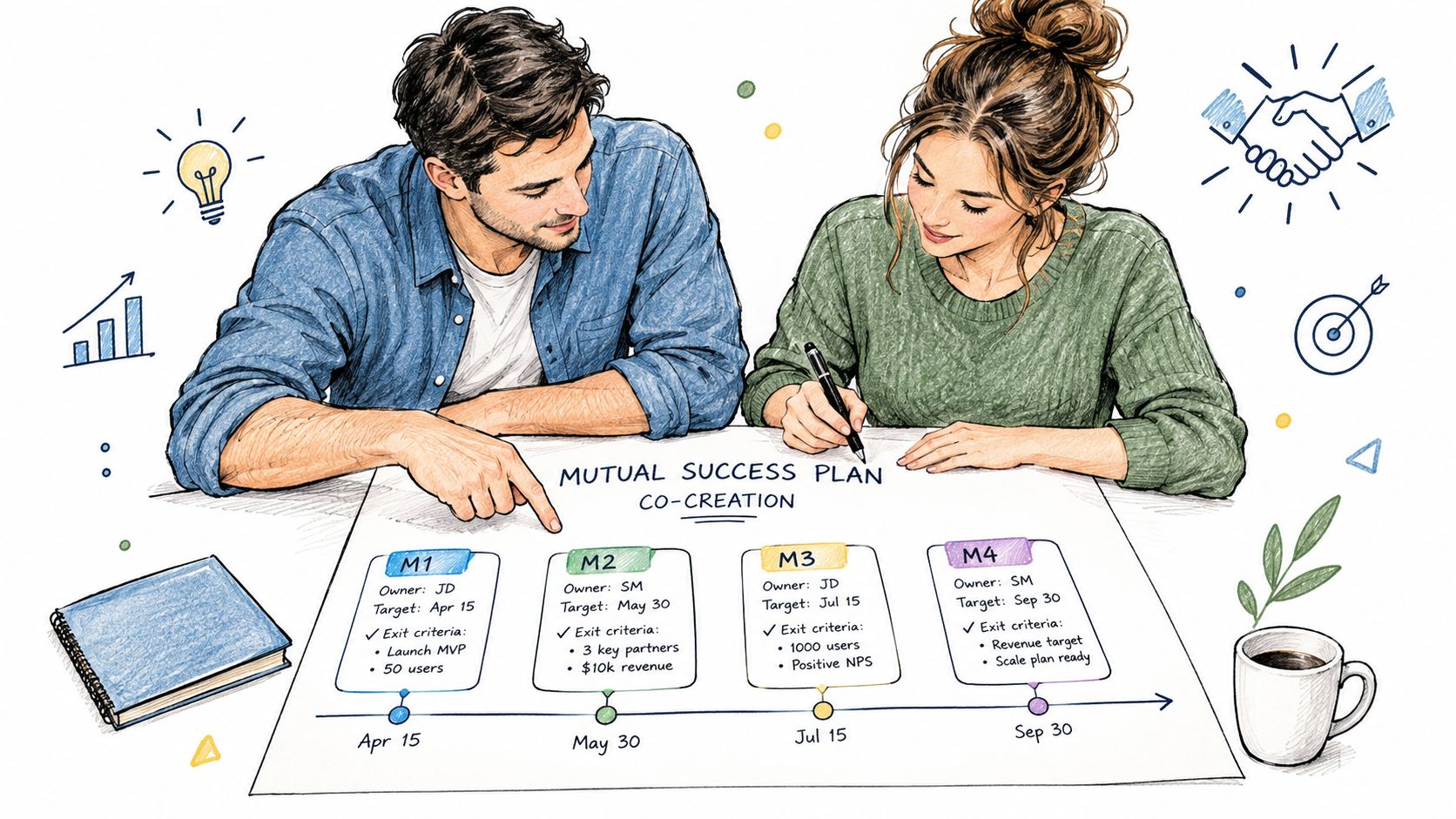
A mutual success plan is one of the best trust moves in PreSales because it makes the buyer's internal process visible. You're not handing them a plan for the sake of neatness. You're building a shared document with milestones, owners, dates, and decision criteria so both sides can see what has to happen next.
For Solution Engineers, this matters because technical work drifts when no one owns the sequence. Security reviews get left late. Procurement appears at the last minute. Internal approval steps stay hidden. A co-created plan pulls those risks into the open while they're still cheap to fix.
The buyer should help write it, not just approve it. Their version is usually more accurate than yours, especially for approval paths and political constraints. Keep it to one page so people can read it in two minutes. Review it at every meeting, and don't let it become a document you send once and forget.
An SE and champion at a mid-market insurer can do this with milestone language that includes the security review, a target signature date, and a clear owner for each step. If the review slips, the slip is visible. That's the point. Hidden drift is what burns time.
Use this kind of plan alongside your deal qualification and your MEDDPICC approach for Solution Engineers when the deal is getting serious. If the buyer won't name an economic buyer or a decision date, the plan exposes the gap fast.
4. Written POC Success Criteria Sign-Off
A written POC sign-off is where trust becomes operational. Before the proof of concept starts, the buyer signs criteria that define success, measurement, judgment, timelines, scope boundaries, and what happens if criteria are met or missed. Without that, a POC is just expensive ambiguity.
This exercise protects SE time, protects reputation, and gives the AE a real basis for forecasting. It also reduces the most common late-stage argument, which is whether the pilot “felt successful” even though nobody agreed on what success meant.
Write the criteria in the buyer's language and make each one testable. Replace vague words like fast or easy with observable behaviors. Name who judges the outcome, not only who runs the tests. Include partial success so the POC doesn't drift into an endless extension.
A simple example is a data platform POC with three criteria, ingest a sample dataset within a defined window, query response for named reports, and sign-off from the data engineering lead. If two pass and one doesn't, the gap becomes a decision point instead of a vague negotiation.
If you want a template to shape the document, use the POC success criteria template for Solution Engineers. The strongest teams also turn the sign-off into the agenda for a midpoint checkpoint, not just a kickoff artifact.
5. Pre-Mortem and Red Team Review
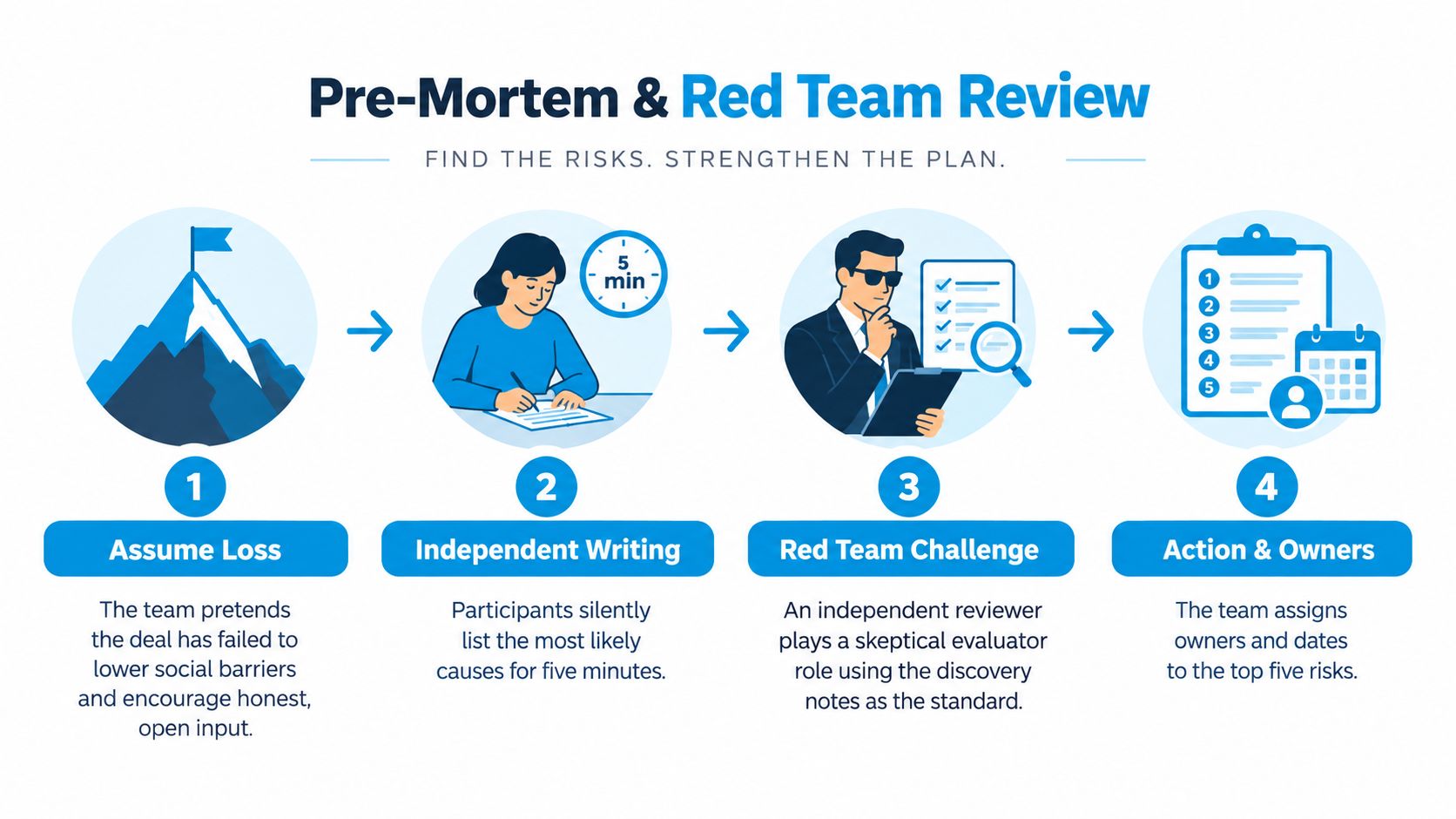
The best trust exercise before a big demo or proposal is to let people challenge the deal before the buyer does. A pre-mortem asks the team to assume the opportunity has been lost and list the likely causes. A red team review then has an independent reviewer attack the proposal or demo as a skeptical evaluator.
Together, those two moves surface technical, political, and commercial risks that the solution builder may not see. They also create a visible record of who owns each risk and by when. That matters in PreSales because most deal surprises were visible somewhere before the customer meeting, just not discussed clearly enough.
Ask people to write without speaking for five minutes before anyone talks. That keeps the loudest voice from anchoring the room. Limit the list to the top five causes, then assign each one an owner and a date. Keep the tone pointed at claims and assumptions, not people.
A healthcare demo is a good example. A peer SE plays the buyer's compliance officer and asks where audit logs are stored and retained. The presenter had assumed the answer lived in standard documentation. The review changes the demo to show the retention settings screen. That's trust-building because it proves you're willing to expose weak spots before the buyer has to.
A useful way to sharpen the process is to compare the team's assumptions against your discovery notes. If the same risk keeps showing up, the underlying problem is often a question nobody asked early enough.
6. Blameless Win-Loss Deal Retrospective
A blameless retrospective is a trust-building exercise that pays off after the deal, not just during it. Run it within two weeks of a significant win or loss, and focus on what the technical process did well, what it did poorly, and what should change next time. Borrow the attitude from site reliability practice, keep the blame out, and look for system causes.
That tone matters. If people think a retro is really a performance review, they'll stop telling the truth. When the SE can describe what the process allowed to happen, the team gets better data and less defensiveness.
Use the AE and SE differently in the room. Let the AE speak first on commercial timing. Let the SE speak first on technical milestones. Then ask the question, “What did the process allow to happen?” That wording keeps the conversation on workflow, sequencing, and handoffs.
A common win-loss pattern is easy to spot. Teams review several lost deals and realize each one had a POC with no written exit criteria. The lesson is not that someone failed. The lesson is that the standard process let ambiguity survive too long.
If you want a strong model for the conversation, listen to the win-loss report discussion for SE teams. For a simple way to document the learning, you can also review your content post mortem. Share the top learnings with the broader SE team and connect them to your technical win definition.
7. Joint Call Role Contract
Before a joint customer call, the AE and SE should agree in writing who leads which segments, who answers which questions, and what neither person will commit to. That tiny contract is a trust move because the buyer hears coordination instead of improvisation.
It also protects the SE from being cornered into a roadmap promise or a commercial commitment. In a live call, that matters more than many teams admit. A clear handoff lets you answer faster, stay consistent, and keep the buyer's confidence steady.
Keep the contract short. Three lines is enough, who leads, who answers technical questions, and what you won't commit to on this call. Use the same handoff signal every time so the switch feels natural, not awkward. Review the contract after each call at first, then move to a lighter format once the pair has rhythm.
A finance call is a strong example. The AE leads commercial context, the SE leads security questions, and both agree roadmap timing stays out of the call unless product marketing has confirmed it in writing. If the buyer asks about data residency, the SE answers and the AE follows up on commercial impact. That coordination is visible in the moment.
For prep flow, the pre-call planning guide is useful when you want to tighten the sequence before a high-stakes meeting.
8. Reference Customer Peer Call
A reference customer peer call is one of the most persuasive trust exercises because the buyer hears from someone with no commercial stake. The SE's job is to make the call useful, not theatrical. That means matching the right reference, briefing them on the buyer's context, and debriefing both sides afterward.
The buyer should get to ask two or three specific questions before the call. Share those questions with the reference in advance, but don't script the answers. The reference should sound like a peer, not a spokesperson. If the reference never used the feature the buyer cares about, the call isn't a fit, and the SE should say so early.
Preparation is where real value is created. A manufacturer asks for a plant using the same legacy system, and the SE finds a similar customer. The reference explains that integration took longer than planned, so the SE adds buffer time into the mutual plan. That's trust by realism, not spin.
Practical rule: Use the call to test the buyer's assumptions, not only to validate vendor claims.
Keep a record of which references fit which use cases so you can match faster next time. If you want a customer-video format that can sit next to live references, see video testimonials features. The point is the same, let the buyer hear a credible peer speak plainly.
8-Point Trust-Building Exercise Comparison
| Technique | Implementation complexity | Resource requirements | Expected outcomes | Ideal use cases | Key advantages |
|---|---|---|---|---|---|
| Discovery Read-Back | Low, fits into discovery end | Minimal, SE time to restate and send recap | Shared understanding, fewer demo failures | End of discovery; multi-stakeholder sessions | Validates listening; surfaces gaps early; low cost |
| Known‑Limitations Disclosure in the Demo | Low–Medium, needs prep and framing | SE time plus product/PM alignment for roadmap statements | Increased trust; fewer late objections; earlier disqualification of poor fits | Mid/late‑stage demos where gaps matter | Candor controls framing; reduces surprise objections |
| Mutual Success Plan Co‑Creation | Medium, collaborative drafting and upkeep | Time from champion, AE, SE; ongoing maintenance | Clear milestones, owners, and timelines; reduced drift | Complex or long sales cycles with multiple approvers | Makes internal approvals visible; aligns stakeholders |
| Written POC Success Criteria Sign‑Off | Medium–High, formal document and signers | Buyer signatories, SE prep, sometimes legal/procurement | POC becomes a decision event; limits scope creep; clearer forecasting | Proofs of concept or pilots with material SE investment | Protects SE time; forces measurable, accountable criteria |
| Pre‑Mortem and Red Team Review | Medium, structured facilitated session | AE, SE, sales leader, independent reviewer; 30–60 min | Identified risks with owners and mitigation actions | High‑value or risky deals before demos/POCs | Surfaces hidden technical/political risks; reduces overclaims |
| Blameless Win‑Loss Deal Retrospective | Low–Medium, short structured debrief | Team time within two weeks; documentation storage | Organizational learning; process improvements; pattern detection | Significant wins or losses for learning and metrics | Builds learning loop; focuses on systemic causes, not blame |
| Joint Call Role Contract | Low, quick pre‑call note or huddle | 5 minutes pre‑call between AE and SE | Clear on‑call roles; fewer contradictory commitments | Any joint AE–SE customer call | Prevents mixed messages; improves on‑call coordination |
| Reference Customer Peer Call | Medium, matching, briefing, and debrief | Reference customer time, SE preparation and coordination | Third‑party validation; answers implementation questions | Buyers needing peer evidence or operational insight | Unfiltered customer perspective; strengthens champion case |
Start With One Exercise on Your Next Live Deal
Pick one exercise for your next live opportunity and run it end to end before you add a second. A read-back after discovery and a written success criteria sign-off cover most of the trust gap in early-stage work and POCs. Once those feel routine, add the known-limitations block to your demo and the pre-mortem to your next deal review.
Don't turn this into theater. The buyer should be able to point to a recap, a plan, a sign-off, or a decision rule and see how you work. That's what trust looks like in PreSales, visible behavior tied to the technical win. If your team wants structured practice on live deal moves like these, explore the Trusted Advisor Academy or book a conversation through SE Rockstars.
PreSales Unleashed GmbH helps Solution Engineers and PreSales leaders build the habits that make trust visible in live deals. Through the Trusted Advisor Academy, you get structured practice, deal-ready assets, and feedback on discovery, demos, and POCs so your trust building exercise turns into buyer-checked proof. If you want your team to run these moves with more consistency, visit PreSales Unleashed GmbH.