
A solutions engineer is the technical counterpart to the account executive in a B2B software sale: the person who understands the customer's problem, proves that the product solves it, and builds the business case. Sales engineer, solutions consultant and presales consultant are, in most companies, different names for that same job. The differences that do exist are not in the title. They are in where the role reports, whether it carries a quota, and how much of the work happens after the signature.
TL;DR
- Same job, different labels. Sales engineer, solutions engineer, solutions consultant and presales consultant describe the same work in most B2B software companies. The title mostly reflects company history.
- Three things actually differ between roles: reporting line (sales or consulting), incentives (quota or none), and post-sale involvement.
- Solutions architect is the real outlier — where both titles exist, the architect designs the implementation and often stays after the contract.
- Titles are chosen for positioning. Sybit's PreSales team brands itself "Solution Advisors" to reinforce a trusted-advisor role rather than a sales-adjacent one — and backs it with a setup to match.
- When you read a job ad, ignore the title. Read who the role reports to, how it is paid, and what it owns.
What is a solutions engineer?
A solutions engineer works the technical and functional side of a complex sale. They lead discovery, design and deliver the demo, run proofs of concept, answer security and architecture questions, and hand the deal over to delivery. The outcome they own is the technical win — the customer confirming that the solution fits. Price and contract stay with the account executive.
The title tends to appear where the product is a platform or where the "solution" spans several products, and where the company wants to signal that the role solves problems rather than sells. The work is the same as that described in What Does a Sales Engineer Do?, and all of these titles belong to the function explained in What Is PreSales?.
What is a solutions consultant?
A solutions consultant does the same job with the emphasis on business process rather than technology. The title is common at vendors of business applications — ERP, CRM, HR, finance — where the conversation is with a head of sales or a finance director rather than with IT, and at implementation partners, where the person may also deliver.
That shift in audience is real and growing. PreSales conversations increasingly happen with business stakeholders who don't care how a problem is solved, only that it can be. A title with "consultant" in it fits that room better than one with "engineer".
Is there a real difference between sales engineer, solutions engineer and solutions consultant?
Rarely in the work; sometimes in the setup. Statistics agencies don't distinguish them either: the US Bureau of Labor Statistics files the whole occupation under "sales engineers".
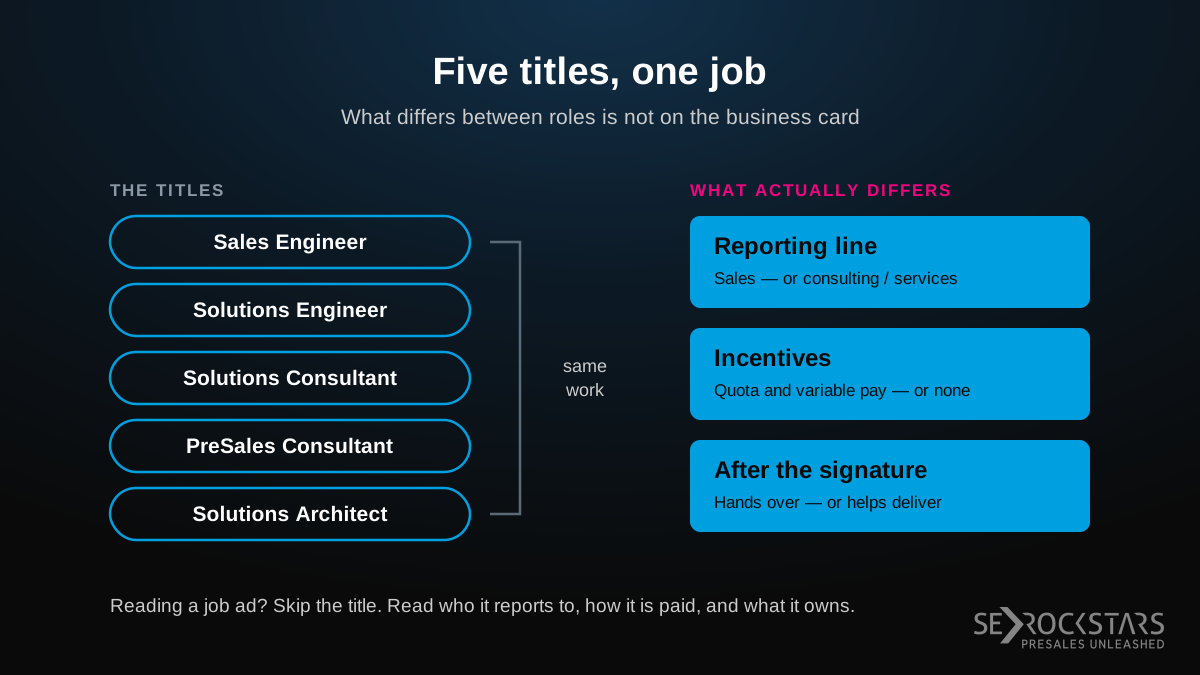
Five titles, one job — and the three dimensions on which a given role can genuinely differ.
| Title | Where you see it | What the title signals |
|---|---|---|
| Sales Engineer | The long-standing default, especially in US software and in hardware-heritage companies | You carry deal outcomes, not tickets |
| Solutions Engineer | Platform and multi-product SaaS | Problem-solving over selling; often the same team renamed |
| Solutions Consultant | Business applications; implementation partners | Business process and advisory emphasis |
| PreSales Consultant | European enterprise software; service providers | The function named directly; often sits inside consulting |
| Solutions Architect (presales) | Infrastructure, cloud, integration-heavy products | Design depth; frequently continues after the sale |
| Demo Engineer | Larger PreSales organizations | Builds and maintains demo environments rather than running deals |
| Value Consultant / Value Engineer | Enterprise vendors with large deals | Owns the quantified business case |
The differences worth asking about sit underneath the title:
Reporting line. Most teams report into sales. Some sit inside consulting or services. At the SAP partner Sybit, PreSales is organisationally part of consulting, with targets that mirror those of the solution consultants rather than revenue numbers.
Incentives. Many SE organizations tie part of the pay to team or territory revenue. Some deliberately don't. Sybit's team carries no sales quota at all — with the same commission structure as the sales reps, its lead Saskia Cempel argues, advisory quality would eventually suffer because you start pushing for the close instead of giving honest counsel. The full story is in Consultant or Salesperson?.
Post-sale involvement. At a vendor, the role usually ends with the handover. At a partner, the same person may deliver what they sold — which buys credibility, because when they say "yes, that works", the same organization has to make it true. We look at that model in PreSales From the Partner Side.
How does a solutions architect differ from a solutions engineer?
Where a company has both, the solutions engineer works before the contract and owns the technical win, while the solutions architect designs how the solution will actually be built and integrated, and often stays involved after signature. In many companies there is no difference at all — "architect" is simply the senior or more technical grade of the same presales role.
The distinction is sharpest in infrastructure and cloud, where the design is the sale, and at implementation partners, where the line moves again because one person may do both. If a job ad says solutions architect, check whether the role is pre-sale, post-sale or both. The title won't tell you.
What is a demo engineer?
A demo engineer builds and maintains the environments, data and assets that the rest of the PreSales team demonstrates with. The role exists in larger organizations where keeping demo systems realistic and current is a job of its own.
It is also the part of PreSales that automation is changing fastest. Demo preparation that used to take two or three days is collapsing toward an instant operation, which makes demo infrastructure more valuable and manual demo preparation less so. For SE leaders the consequence is to stop investing in manual prep and invest in the infrastructure that lets demos be generated — the argument is in The GUI Is Dead. Long Live the API.
Which title should a company use for its PreSales team?
The one that matches the conversation you want your people to have. Titles are positioning, and customers read them.
Sybit brands its PreSales team externally as "Solution Advisors", to reinforce a trusted-advisor role rather than a sales-adjacent one. That is a deliberate choice, and it is consistent with how the team is set up: inside consulting, without a quota. A title that promises advice while the comp plan rewards the close is a contradiction customers eventually notice.
Three practical rules:
- Pick for the buyer, not for the org chart. If your people mostly talk to business stakeholders, "consultant" or "advisor" fits. If they talk to engineers, "engineer" or "architect" earns faster credibility.
- Make the setup match the title. Reporting line, incentives and what the role owns should tell the same story as the business card.
- Don't rename instead of changing. Moving from "sales engineer" to "solutions consultant" without changing how the team does discovery is a new label on the same demo.
On newer labels: most SE leaders we've spoken to see Forward Deployed Engineer as a well-paid rebrand of work PreSales already does — the competencies that get a deal across the line matter far more than the title. More on that in What Skills Will Solution Engineers Need in the Age of AI?
Frequently asked questions
Is a solutions engineer the same as a sales engineer? In most B2B software companies, yes. Both lead discovery, deliver demos, run proofs of concept and own the technical win alongside an account executive. "Solutions engineer" is the more recent title and is common in platform and multi-product SaaS.
What is a solutions consultant? A presales role with the emphasis on business process and advice rather than technology. The title is widespread at vendors of business applications and at implementation partners, where the consultant may also deliver the project.
Solutions engineer vs solutions architect — which is more senior? Neither by definition. In some companies "architect" is the senior technical grade of the presales team; in others it is a separate role that designs the implementation and continues after the sale. Check whether the role is pre-sale, post-sale or both.
What is a presales consultant? The same role named after the function. The title is common in European enterprise software and at service providers, and often indicates a team that sits within consulting rather than sales.
Does the title affect pay? Less than the setup does. What moves pay is whether the role carries variable compensation, how large the deals are, and the company's market. Compare base, variable split and what the variable is tied to — not titles.
Which title should I put on my CV? The one you held. In the summary line, add the function in plain words — "PreSales / solutions engineering for B2B SaaS" — so a recruiter searching for any of the variants finds you.
Whatever your team is called, the work that wins deals is the same: discovery that reaches the business problem, and proof that you can solve it. That is what the Trusted Advisor Academy trains every week. If you lead the team and are rethinking its setup, that belongs in the Trusted Leader Academy.
Tim Brömme & Jan-Erik Jank are the co-founders of SE Rockstars, with 30+ years in enterprise PreSales and 350+ SEs coached.